Saturday, August 22, 2015

Rice culture days return to Middleton Place


As an integral part of its educational programming, Middleton Place will celebrate Low Country Rice Culture Days again on Friday and Saturday, September 18-19, at the Outdoor Educational Center in the Middleton Place Stableyards. All activities associated with this event are included in the price of Gardens and Stableyards admission.

Though many aspects of the rice industry in the South Carolina Low Country will be discussed (i.e. origins, planting, cultivating, cultural impact), the bulk of the program will focus on the processing of Carolina Gold Rice and the tools used to complete this task.

Costumed interpreters will demonstrate and discuss the varied steps used in processing:

Threshing (the removal of the rice from the stalks); Winnowing or Fanning (separating the rice from the chaff and the hulls); Pounding (removing the hull off of the rice); and Polishing (removing the bran from the rice).

Costumed interpreters will also be creating tools used in the rice processing process, including the Flail (used in threshing) and Pestle and Mortar (used in pounding and polishing).

As South Carolina’s first great agricultural staple, Carolina Gold rice dominated the Low Country’s economy for almost two hundred years, influencing almost every aspect of life in the region from the early 18th century to the early 20th century.

Carolina Gold was responsible for the area’s rise to prominence in the colonial era, as it was sought worldwide. However, the commercial rice industry collapsed in the late 19th century, leaving much of the Low Country with few viable economic options for a half-century or more.

The rice was usually harvested from September through November. Enslaved people cut down the stalks just above ground level with hand scythes, called “rice hooks,” leaving them to rest on the stubble to dry. When dried, the stalks were gathered into sheaves and stacked on carts or flat-bottomed boats to take to the processing area.

Threshing, or separating the rice from the stalk, was done manually using hand tools called flails. Next, a large, round winnowing or “fanner” basket, commonly made of sweetgrass, was used to separate the rice from the chaff by “fanning” the mixture into the breeze to blow away the chaff. At this point, with the outer husks still on, the rice could be gathered and sold as “rough rice.”

To produce an edible product the rice was placed in a large mortar and with a pestle was pounded or “beaten” to remove the husks. Known as “brown rice,” this could be sold and eaten, but required further processing for shipment overseas.

Since most rice was grown for export, the oily, highly nutritious bran covering of the brown rice had to be removed before it could be packed into barrels for shipping. Otherwise, the rice would spoil due to the lack of air circulation. This process also used the mortar and pestle to “polish” the bran off the rice, and fanner baskets to separate the rice from the bran.

The white whole grain rice was then packed into barrels made by skilled enslaved coopers on the plantation. The barrels were then loaded on schooners for the trip to the port of Charleston. From there the barrels were loaded on seagoing ships for the journey to English ports such as London, Manchester, and Liverpool. Publicizing this non-profit event can help many locals and visitors learn more about the colonial economy of South Carolina and how Carolina Gold rice influenced Low Country culture.

For more information, please contact Stephen Reed, Director of Communications, at (843) 266-7476 or by email at: sreed@middletonplace.org.

‘Nigeria depended on imported rice for too long’


Rotimi Williams

Rotimi Williams, 34, is a rice farmer and the Managing Director, TW Heritage Company which includes Kereksuk Rice Farm in Benue State. In this interview he talks on why rice farming should be given priority in Nigeria.

Daily Trust on Saturday: Many people your age would not venture into farming, so what motivated you?

Rotimi Williams: I simply ask myself the question ‘if not me, then who?’ The primary problem in Nigeria today is that we wait for others to do things for us and this has to stop. We need to learn to take the initiative. I would like to view this as a ‘Revolution of the Mind’ rather than an agricultural revolution. So, I began with the farm out of Poverty campaign.

DT: What are the potentials for rice farming in Nigeria?

Williams: The potential for rice farming in Nigeria is enormous, but we have become lazy and dependent on imported rice for far too long. The former Minister for Agriculture, Dr Akinwunmi Adesina did a remarkable job in getting agriculture back on track, but most importantly, he led the Rice Revolution. This in my view is only the beginning and the in-coming Minister for Agriculture must follow the line. For example, Dr Adesina ensured that the 2014-2015 rice allocation was given to both rice producers and millers to ensure continued investment in the sector through backward integration. This allowed farmers to fund their activities without depending on bank funding. The minute he left office at the end of his term, another allocation was immediately drafted, which totally excluded producers and favoured only millers. Who then produces the paddy rice for these millers?

In terms of actual rice production, Dangote remains the largest landowner, with 100,000 hectares for rice production, while my company, Kereksuk has 50, 000 hectares, the second largest for rice production in Nigeria. Both farms are not running at full optimisation and even at full optimisation, both companies will produce at best 1.3 million tonnes of paddy. Assuming we are able to achieve 9 tonnes per hectare annually, this translates to approximately 810, 000 tonnes of milled rice, assuming we recover 60 percent of rice after milling. According to figures from the Federal Ministry of Agriculture, the annual demand for rice in Nigeria is approximately 5,000,000 metric tonnes (mt) deducting what both farms will produce at full optimisation will still leave an enormous gap of 4, 190, 000mt.

DT: In what ways will CBN’s decision on the ban of importers from accessing Forex affect rice processing in Nigeria?

Williams: From the perspective of a local rice farmer, the decision by the CBN will certainly encourage investment and participation in the rice sector, but not as easily as CBN suggests, someone still needs to fund this sector. The issues of insufficient rice production in Nigeria cannot simply be narrowed down to rice importation, but a failure to fully understand the rice value chain and address the issues that affect the value chain. If anything, importation itself is a function of our inability as a nation to tackle the issues affecting local rice production and rice traders have simply taken advantage. One of the most prevailing issues with rice production, which till date remains a problem, is that of funding. Our local banks are happier to fund the processing aspect of rice production, but not the actual farming and if we rely on the contribution from the subsistence farmers, there is the issue of quality, quantity as a result of insufficient inputs and the know-how.

Another direct result of the CBN ban on accessing Forex is increased smuggling activities from neighbouring countries. The ban on accessing Forex and 70 percent duty and levy on importers makes Benin Republic and Cameroun a more attractive trading hub for cheaply imported rice and they simply truck it down to Nigerian markets. I thought we had learnt our lessons from 2013, but clearly not, the Nigerian government is going to lose a substantial amount of their revenue to these countries.

So, if the CBN is willing to address the issue of funding for the entire value chain, and not just processing, then by all means, ban importation of rice. However, if this is not going to be the case, I will suggest that the CBN, in consultation with the relevant ministries, come together and reach a common consensus on how to progress, as I am aware that the Federal Ministry of Agriculture, Ministry of Trade and Investment, and Ministry of Finance in 2014 agreed on an import quota system for local rice stakeholders, which phases out in two years.

DT: Why is our locally produced rice more expensive?

Williams: There are too many factors affecting the price of our locally produced rice, but I will mention a few that I feel needed to be addressed with urgency. I will first touch on the quality of our seeds, which I think are playing catch-up with leading rice-producing countries, making our produce less competitive. The resulting yields from these seeds means that the cost at which millers purchase paddy is high with varying quality and subsequently, the rice recovered after milling is below the global average of 62 percent.

The land preparation process and inputs for rice farming is a lot more demanding than most crops and because majority of the rice paddy available for sale to millers are grown by subsistence farmers, it is obvious that yields will be a lot less in comparison to the likes of Thailand and India, that use full mechanisation process for land preparation and all inputs, that is, fertiliser and high-yielding seeds.

The next point is funding. Banks in Nigeria rather take a risk on funding machinery, rather than the production of the raw material, rice. This coupled with the fact that cost of funds are in double digits, most farmers have no access to such funds and those that have access struggle to pay up and this is reflected in the price of rice. Given the high cost associated with the actual production of paddy, there is no subsidisation on the cost of paddy to millers, as we see in Thailand, thus, this cost is passed on to the final consumer.

Another major issue is infrastructural deficit such as access roads, which increases transportation cost and lastly, but most prevailing, power supply. Inadequate power supply means that the rice millers have to run on diesel-powered generators.

Given these challenges faced by rice producers, we now have the issue of cheaply imported and smuggled rice in the market. With uncontrolled influx of cheap imported rice, the locally produced ones become less attractive for consumers.

DT: What advice would you give the government to enhance the growth of rice farming and processing in Nigeria?

Williams: Firstly, take time to understand the entire rice value chain and understand how each section is funded, then create a special fund, with strict compliance and monitoring. I believe that such fund should focus more on large-scale farms as they are better organised to utilise such funds in area of technological know-how and production and easier to monitor.

Secondly, map out the rice processing states and regions for better organisation to aid input distribution and economies of scale. Such arrangements will make it easier for both potential local and foreign investors to identify their areas of investment.

The government needs to have a better understanding of who is doing what in the rice industry and verify all claims, as we have had issues in past with some big corporate organisations claiming to be pioneers, but with no products to show.

As a matter of fact, during the tenure of Dr Adesina, the Federal Ministry of Agriculture found that they were bagging imported rice as local rice. Such an exercise will enable us better understand our position and put policies and measures in place to promote the industry.

Lastly, on the issue of smuggling, I see two solutions. First, an outright ban on rice will go a long way in ensuring that rice brought into the country is limited and for those that are successful, it may be at an unattractive cost. Secondly, drop price of locally produced rice below imported, but this can only be achieved if the other issues are resolved.

Friday, August 21, 2015

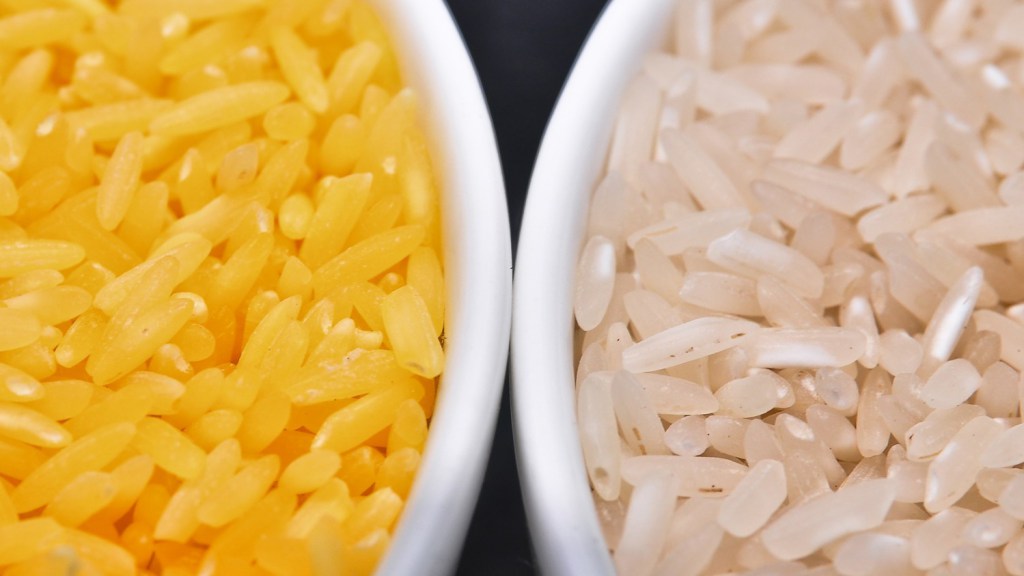
Yet another land mine for GMO Golden Rice


Good God, what a mess: That’s what I kept thinking as, face in palm, I read the latest updates on an evolving controversy over Golden Rice. I was alerted to it by a recent piece in the Boston Globe, but Retraction Watch had the story first. Here’s their summary:

 The American Journal of Clinical Nutrition is retracting a paper that showed genetically engineered rice serves as an effective vitamin A supplement after a Massachusetts judge denied the first author’s motion for an injunction against the publisher.

 The journal announced plans to retract the paper last year following allegations that the paper contained ethical mis-steps, such as not getting informed consent from the parents of children eating the rice, and faking ethics approval documents.

 Last July, first author Guangwen Tang at Tufts University filed a complaint and motion for preliminary injunction against the journal’s publisher, the American Society for Nutrition, to stop the retraction.

 According to the ASN, on July 17, a Massachusetts Superior Court “cleared the way” for the publisher to retract the paper. So they have, as of July 29.

 Basically, the study gave some kids Golden Rice, some kids vitamin A supplements, and some kids spinach. The study found that Golden Rice worked as well as the vitamins, and the spinach wasn’t as good. And those findings seem to be valid, despite the retraction. Here’s what Tufts University told Retraction Watch:

 The journal indicated that its retraction was based on the fact that the authors were unable to provide sufficient evidence that the study had been reviewed and approved by a local ethics committee in China and that parents and children involved in the study had been provided the full informed consent form as well as eligibility issues identified in regard to two subjects in the study. No questions were raised about the integrity of the study data, accuracy of the research results or safety of the research subjects.

 Tang isn’t talking, but here’s what I bet happened: She thought she was testing the ability of a totally safe rice to deliver vitamin A, and so she only sought consent for that. I can imagine that many scientists might not even think to mention, or get consent, for the fact that this rice happens to be genetically modified, because to many scientists genetic modification is a non-issue — no more important than the color of the hat the farmer wore when cultivating. But it turned out, it was an issue for people, and that’s important, whether it’s a scientifically valid safety issue or not.

 Consider the issue through the lens of a different hypothetical case: Let’s say I’m doing a clinical trial on a drug in gelatin capsules. I’m just testing the drug, and the gel-caps may be perfectly safe from my perspective. But if I’m working with any strict vegetarians, I better be damn sure to tell them that the drugs are delivered in a capsule made from animal products. People’s values matter. And when it comes to GMOs, I bump into a lot of scientists that have a hard time accepting that: They are empiricists — they are interested in facts, not values!

 Values can be disgusting and hateful, and I’m not saying anyone should kowtow to cultural ideals they consider wrong. I’m just saying that failing to consider people’s values, no matter how groundless you think they are, is a recipe for failure. If you want someone’s cooperation — so that they might participate in your study, or get a flu shot, or start fighting climate change — you have to understand their values. You can try to convince them they are wrong, but you can’t expect them to simply agree that science has closed off the debate, and start helping you.

 Scientists are usually best at doing science, and not always the best at doing diplomacy or cross-cultural communication. We need scientists to inform the decisions we make about handling new technologies, but it can be hard to hear the scientists whose findings don’t fit with our values. Our ability to communicate lags behind our ability to discover.

 At this point, after 30 years of vitriolic debate over genetic engineering, it seems to me that many of the most empathetic scientists, the people who can understand and speak to the values of their opposition, have retired to the sidelines. The people who keep up the struggle often have great conviction, and little interest in seeing the world with the eyes of their adversaries. Stories like this only speed the vicious cycle.

OAG says graft in low-cost rice sales scheme cost state B3.8bn Please credit and share this article with others using this link:http://www.bangkokpost.com/news/general/662196/oag-says-graft-in-low-cost-rice-sales-scheme-cost-state-b3-8bn. View our policies at http://goo.gl/9HgTd and http://goo.gl/ou6Ip. © Post Publishing PCL. All rights reserved.

The Office of the Auditor-General (OAG) has found several irregularities in the Public Warehouse Organisation's (PWO) implementation of the low-cost rice sale programme under the Yingluck administration, saying their misconduct cost the state about 3.8 billion baht in losses.

 A source at the OAG said implementation of the project -- which aimed to distribute low-priced rice to consumers -- was not in line with the project's objectives.

 The prices at which the rice was sold to consumers were higher than the required 70-baht per bag stipulated by the rice-pledging scheme.

 As part of the scheme, the PWO was allowed to purchase 503,518 tonnes of rice at half the market price.

 The PWO then signed contracts with six companies to distribute the bagged rice for sale, but none of the contracts with the companies said the rice had to be resold at 70 baht per bag.

 The contracts should have stipulated that if a third party bought the rice from the companies, the same 70-baht rule would apply for its resale. In its absence, consumers could not reap economic benefits.

 The OAG investigation also found that only one of the six contracted companies had experience as a rice retailer and some of the five other companies were related to the first one, said the source.

Witnesses said the companies without experience in selling rice had secured the contracts with the PWO through personal connections, said the source. Worse still, the OAG's probe into the money trail of the project showed the same person purchased cashier's cheques for all six companies when they paid for the rice purchases from the PWO, said the source.

Most importantly, the OAG found the six companies had re-sold the bagged rice to other rice retailers for between 72-75 baht a bag, higher than the project requirements that the rice be sold for under 70 baht per bag, which marked up the consumer cost even more.

 In addition, the rice was bought from farmers for 15,000 baht per tonne.

 But an inspection of the rice warehouses in October 2014 by the Prime Minister's Office found the rice was improperly stored for too long a period of time and only 10% of the 18 million tonnes was good quality and edible.

 The results of the OAG probe have been forwarded to the National Anti-Corruption Commission, along with recommendations that the PWO officials involved be prosecuted for causing damage to the state.

 The report also recommends legal action against the companies for violating the 1999 State Organisation Bidding Act. .

Friday, November 14, 2014

China to sign trade deals worth US$8 billion with Myanmar

Premier Li Keqiang speaking in Myanmar on Friday

China will sign more than 20 trade deals worth more than US$8 billion with Myanmar on Friday, Premier Li Keqiang said.

The trade deals included a US$200 million microcredit loan for Myanmar to combat poverty and an agreement to import 100,000 tonness of rice to China, even though China produces enough rice for itself, he said.

“Although China has a sufficient supply of rice, in consideration of the [economic] needs of Myanmar, we will import 100,000 tonnes of Myanmese rice,” he said.

Between 3,000 and 3,500 tonnes of rice used to cross the border illegally each day, the Myanmar Times reported in February, because Myanmar traders could make more money selling to Chinese traders, who then smuggled the food into Yunnan.

But the authorities began clamping down on the illegal trade this year because there was no rice trading agreement between the countries.

China would also expand a scholarship that would let 100 students study in China from next year, he said .

Li wrapped up his half-day official visit to Myanmar on Friday afternoon. He arrived on Wednesday for a series of meetings with leaders in the Association of Southeast Asian Nations (Asean) and the East Asia Summit.

“More than 20 years ago, I paid a visit to Myanmar as a young person and met many people of different age groups. It left a strong memory, and made me feel the particular friendship between Myanmar and China,” he said, using a Myanmar word often used to familiarly describe Sino-Myanmese relations.

He said his short trip barred him from meeting leaders of different political parties and sectors in the country, but he would like to meet them in the future.

A senior official at opposition leader Aung San Suu Kyi’s National League for Democracy said Suu Kyi would visit China next month, but she later said the trip had not been confirmed.

China, a major investor in Myanmar, has been stung by criticism that it is only interested in the country for its natural resources and that its investment has come at a huge cost.

In 2011, Thein Sein suspended the US$3.6 billion, Chinese-led Myitsone dam project, some 90 per cent of whose power would have gone to China.

“We hope these deals will materialise and … improve the livelihoods of the people of Myanmar,” Li added.

Thailand. Ministry plans 2m-tonne rice deal with China

Thailand plans to sell a further 2 million tonnes of rice to China under a government-to-government contract after the delivery of an existing order for 1 million tonnes to that country is completed next year.

Commerce Minister General Chatchai Sarikulya said his ministry would discuss the new G2G rice contract with the China National Cereals, Oils and Foodstuffs Corporation (COFCO), a state agency for oil, rice and foodstuff imports, with a view to further sales.

"The country will accelerate shipments of the existing order for 1 million tonnes. We will sell another 2 million tonnes to China after completion of the 1-million-tonne shipment," he said.

Thailand so far has shipped 300,000 of the 1 million tonnes under the existing contract, and is scheduled to ship the rest by next July. Chatchai said that for the remaining 700,000 tonnes, the government would encourage China to import jasmine rice, as it has more added value.

China is one of the largest import markets for Thai rice, with jasmine rice picking up interest among consumers.

During a trip to Thailand by COFCO officials this week, the delegation will be taken on a tour of rice and jasmine-rice fields and witness the production process from milling to packaging, in order to gain confidence in Thai products. Also, the ministry's Foreign Trade Department will demonstrate the DNA inspection process to the visitors.

To promote Thai rice in China, the Commerce Ministry will launch a series of activities including a cooking pavilion at a Chinese supermarket to raise awareness of Thai products.

With closer cooperation between Thai and China agencies, it is hoped that Chinese consumers will develop a preference for Thai rice.

Moreover, Thailand will work closely with Chinese importers to tackle the problem of lower-quality grains being mixed with Thai rice. The ministry will insist on the display of the Thai rice-certification logo to ensure that all Thai rice sold in China is pure. Any rice trader found mixing Thai rice with other products will be subject to punishment for breaching Thai intellectual-property rights.

The ministry will encourage Thai rice exporters to use the certification logo for jasmine rice to boost the confidence of buyers.

China imports about 4 million tonnes of rice each year, mainly from Vietnam and Thailand.

Wednesday, October 22, 2014

Rice growers wrap up drought-diminished harvest


Farmer Greg Van Dyke harvests short-grain rice in a field in Pleasant Grove, Calif. Growers in many areas are wrapping up their rice harvest, with early varieties showing the best yields. 
California rice farmers are wrapping up their harvest of a crop that's expected to be 23 percent smaller than last year's. Good yields on many of the acres that were planted will help make up at least a small part of the loss of revenue, as will sales of rice straw.

WILLIAMS, Calif. — As rice growers in California wrap up their harvest of a drought-diminished crop, good yields and more widespread sales of rice straw are helping them to at least partly make up for lost acreage.

The rice harvest was 85 percent complete as of Oct. 19, according to the National Agricultural Statistics Service. Leo LaGrande, a grower here, finished work over the weekend and said his yields deteriorated as the season went along.

“We had some fields that looked good earlier and we thought it would be better, but it didn’t quite mature to the yields we wanted,” he said. “I would call it an average year for us.”

But yields remained strong for Marysville, Calif., grower Charley Mathews, who also finished harvesting last weekend, he said. Good weather during crop development led to rice that grew tall and went flat, making for slow going during harvest, he said.

“It helps,” Mathews said of the big yields. “The yields might be up ahead of last year’s state average, but not enough to close the gap in our shortfall (in acreage).”

California rice growers are expected to produce 36.8 million hundredweight, down 23 percent from last year, NASS estimated. About 140,000 acres of rice went unplanted this year because of water shortfalls — a 25 percent decrease from last year’s crop, according to the California Farm Bureau Federation.
LaGrande had to leave about one-quarter of his land unplanted, he said.

“We thought we were very fortunate because some of our neighbors had to leave 100 percent out,” he said.
However, the yield forecast of 8,000 pounds per acre would be a 1 percent increase from last year and would tie records set in 2004 and 2008, according to NASS’ office in Sacramento.

The optimistic outlook for yields follows a spring planting season that was more drawn-out than usual because exchange contractors along the Sacramento River agreed to space out their water delivery schedules to maintain the right river temperatures for winter run salmon.

Rice is typically planted between mid-April and mid-May, with harvests coming six months later, but many growers didn’t get started until mid-May and were still planting in June. Those that were still harvesting this week ran into a rainstorm on Oct. 20 that stopped their work.

While farmers welcome the rain, their water worries aren’t over. Many are unsure if there will be enough water to decompose rice straw left in fields.

Willows, Calif., grower Larry Maben may pump water from wells into his fields after harvest if there isn’t enough rain, which is “an awfully expensive source of water,” he said.

“It’s going to be kind of a balancing act,” Maben said.

With not as much water available for decomposition, more producers are baling and selling straw “than I’ve ever seen,” said Mathews, who’s on the USA Rice Federation’s executive committee.

University of California researchers reached out to growers this summer to promote converting their rice straw into “strawlage,” a feed that the scientists say is on a par with a low-quality alfalfa. UC Cooperative Extension advisors said the straw would be a good alternative for livestock producers confronted with feed shortages because of the drought.

The straw can also be used for erosion control in forest fire recovery projects, Mathews said. While decomposition helps the soil, growers can make up for the lack of straw by adding nutrients before planting next spring, he said.

LaGrande said he’ll probably bale 60 percent of his rice straw, the majority of which will be fed to cattle.
“It’s huge,” he said. “I think the dairy industry is grabbing onto it more every year. And this year with the drought, some cattlemen who really never tried rice straw before are buying into it. At $300 a ton for alfalfa or $40 a ton for rice straw, you’re going to try it.”

Thai govt to auction 207,899 tonnes of rice next week

BANGKOK: Thailand will offer to sell 207,899 tonnes of rice from state stockpiles next week, a Commerce Ministry official said on Tuesday.

The tender for sale will open on Oct. 28 at the foreign trade department after the announcement of eligible bidders the same day.

Thailand has stockpiled around 18 million tonnes of rice, accumulated under an intervention scheme by the government of Prime Minister Yingluck Shinawatra who was ousted by the army in May. An audit by the military government found that a fifth of the stockpile was either rotten or had gone missing.

The stockpiles were built up under a programme that paid farmers well above market rates for their produce which effectively priced the grain out of world markets.

The current government wants to offload the stock to recover some of the money spent, but Duangporn Rodphaya, chief of the foreign trade department, said earlier this month that the commerce ministry wants to carry out the sale gradually so as to avoid pushing prices much lower.

Vietnamese Rice Exports Reach 4.9 Million Tonnes This Year

Vietnam exported more than 139 tonnes of rice during the first two weeks of October, bringing total export volume to 4.9 million tonnes so far this year.

The latest volume generated more than US$2.1 billion in value, Vietnam News Agency (VNA) reports citing the Vietnam Food Association (VFA).

The price for rice in October is US$458.35 per tonne -- an increase from US$439.11 per tonne in September.

Without government interventions to increase temporary rice stocks, the price of rice remained high due to the large volume of rice exported to China via border gates.

Vietnam expects to produce 25.48 million tonnes of paddy for 2014, with 8.5 tonnes of rice for export.

Saturday, August 23, 2014

China’s early rice output dips in 2014

CHINA produced 34.01 million tons of early rice in 2014, down 125,000 tons, or 0.4 percent, from a year earlier, the National Bureau of Statistics said yesterday in a statement.

According to the bureau, China’s early rice planting area for this year covers 579.5 million hectares, 0.2 percent less than last year, with yield per hectare down 0.2 percent to 5.87 tons.

Huang Jiacai, the bureau’s senior statistician, said it was still a good harvest year for early rice given the unit yield is the second highest in history.

Favorable policies implemented in the provinces of Hunan and Hubei have led to an increase in planting areas in the two regions, he said.

Hunan is China’s largest producer of early rice, with an output of 8.5 million tons and a planting area of 1.45 million hectares in 2014. Neighboring Jiangxi Province ranked second with an output of 8.2 million tons, according to the bureau.

Early rice is mainly planted in eight central and southern provincial-level regions of China — Hunan, Jiangxi, Guangxi, Guangdong, Hubei, Anhui, Fujian and Hainan.

China’s total grain output consists of three parts — early rice, summer grain and autumn production.
In 2013, China’s total grain output grew 2.1 percent year on year to 601.94 million tons, or 10 straight years of higher grain output. Based on the data in 2013, early rice took up nearly 6 percent of total grain output.
The summer grain crops, mainly wheat and early-season rice, accounted for 22 percent of China’s total grain output. Autumn grain crops, which include corn and middle- and late-season rice, took up the remaining 72 percent.

Rice Farming Is Most Profitable In Nigeria Today – Adesina

If you are looking to invest in Nigeria, the largest Economy in Africa, you should consider rice farming which is the most profitable in the Agriculture sector, the Minister of Agriculture, Akinwunmi Adesina, said on Friday.

In an interview centred on food security and the reforms in the Agriculture sector, Dr Adesina said that the agriculture policy of the government had opened up the sector for more investments to thrive.

He said that the government had made necessary contributions in terms of high yield seedlings for small, medium and large scale farmers.

He listed different chains in the agriculture sector that the government’s transformation agenda was focusing on, emphasising that ‘rice is the most profitable’.

The agenda is aimed at shifting the mainstay of the  Nigerian economy from crude oil to agriculture.

“If you invested 14 million dollars in an integrated rice mill in Nigeria today, the internal rate of return on the investment is 42 to 50 per cent and the time it takes you to pay back the investment is exactly two years. It is the most profitable thing that anyone can be doing in Nigeria today.

“That is because the population is rising and people are consuming more rice.

“If we folded our hands in Nigeria today and keep importing rice from India Thailand, by 2050, we will be spending 35 billion dollars importing rice from them.

“We have started distributing this rice variety and when we started, we started with roughly about 406,000 farmers in 2012 then we moved to 2.6 million farmers in 2013. In 2014, we have added another three million farmers growing this rice.

“Fifty per cent of the farmers that are growing rice in the wet season have shifted to this variety of rice that could be planted in dry season. We can now produce in the wet season and in the dry season,” he said.

Africa’s richest man, Aliko Dangote, had said he would be investing a billion dollars in commercial rice milling.

Other big names in Nigeria are also coming into the sector with huge funds, evidencing the viability of the sector.

Thai For Rice In Africa

The Minister said that with the policy that President Goodluck Jonathan had put in place, more investments were expected to come in.

“Nigeria Agriculture has changed and that is why the big names are coming in. They realised that it is a big money making enterprise. There is a role for everybody, the small the medium and the large.

“Aliko Dangote said by God’s grace we will become the Thai for rice in Africa and that is what a good policy does.

“I think that what the president has done is extremely good. He has set very good policies and we are beginning to see the rewards of that.Rice Farming in Nigeria

“In Rice today in Nigeria we have a total of 1.6 billion dollars of private sector investment going there.

“I feel the momentum is there and we will achieve it. I believe that in three to four years Nigeria will, by the grace of God, become just like Thailand for rice in Africa,” Dr Adesina said, expressing optimism that rice production would continue to increase.

Over the years, the amount spent on importation of rice from India and Thailand has been on the increase and the government is looking to reduce this in the next few years.

“It is a shameful thing that Nigeria will continue to import rice when it has the resources to export.

“We could not continue the import demand that we were having. It is affecting the Naira, We are spending so much money defending the Naira and we are exporting our jobs if we continue to import,” he stressed.

Despite the increase in the production of rice, there is still a shortfall of supply, as rice is a staple food that most Nigerians eat.

To shore-up supply, Dr Adesina stressed the need for more awareness to be created to get consumers realise that the “Nigerian rice is great and better than what they have.

“The next thing would be to continue to produce so that they can have regularity of supply to patronise the Nigerian rice.

“Nigerian rice is cheaper than the imported rice. An analysis of the market showed that the weighted price of the local rice is cheaper than the imported rice,” he said.

Since the government policy on rice importation was put in place, Rice smugglers have continued to bring in foreign products.

Mr Adeshina, however, urged security agencies manning Nigeria’s borders to increase surveillance and check smuggling activities.

“We have to deal with the issue of smuggling. We cannot have a situation where people defile our borders and come in with items they like. People don’t carry them on their heads. They go around in trailers and those that have to do their job must do their job,” he said.

Cocoa Farming Gaining Attention

Nigeria used to be a major cocoa exporter, but the discovery of crude oil led to dearth in the production. But as the government is looking to diversify the economy, cocoa farming is gaining gradual attention, with production increasing.

To encourage cocoa farmers in Nigeria the government had started giving away high yields and high breeds of cocoa that give five times the yield that farmers are currently getting.

Over one million farmers all across the cocoa growing states in Nigeria have received seedlings and that translates into roughly 39 million seedlings that have been given away for free. This will allow for the cultivation of 40,000 hectares of new cocoa plantations that will increase production from 350 thousand metric tonnes to 800 thousand metric tonnes in the next two years.

The Minister said that Nigeria was getting close to Cote d’Ivorie Coast and other cocoa producing countries, insisting that Ivory Coast will not beat Nigeria in cocoa.

“We are doing the same thing also for oil palm and we have given away nine million sprouted nuts of oil palm free of charge to farmers.

“We are replacing the tall palm trees variety with short once. Because nobody can export a tree, we are investing in planting them so that it will be producing fruits in the next 30 years.

“We must be looking at our ports’ use which should not only be for imports but for exports also. Our rice today in terms of total value added to our local economy in terms of gross value across all the states is 750 billion Naira since we started in 2012.”

Friday, August 22, 2014

NDA's BREI programme set to increase rice production in north-east

Though the government is yet to release funds for BGREI but it has earmarked Rs 1,000 crore for the programme.

Though the government is yet to release funds for BGREI but it has earmarked Rs 1,000 crore for the programme.

KOLKATA: The NDA government is taking ahead the Bringing Green Revolution in Eastern India (BGREI) a programme that is aimed at increasing rice production in the eastern part of the country.

Though the government is yet to release funds for BGREI but it has earmarked Rs 1,000 crore for the programme, which was conceived by the erstwhile UPA government and is considered to bring second green revolution in the country. But floods in Odisha and eastern Uttar Pradesh may have some impact on eastern India rice production, that contributes more than 50 per cent of the country's rice production.

"The government has already allocated the funds for BGREI. May be it is taking some time to release the funds. We are hoping that funds will come any moment. In the meantime, the government has asked us to carry out a survey on the state of paddy production in the country. Our scientists are visiting different states for field surveys. The government is also keen on usage of hybrid seeds to increase production," said Trilochan Mohapatra, director, Central Rice Research Institute.

Mohapatra is however, a bit worried about paddy production in eastern India.

"Though initially there was a lot of tension as monsoon was delayed but the situation improved gradually in July and August. But now our concern is the flood in Odisha and eastern UP which may damage the standing crop. Right now it is difficult to estimate the impact of damage," he said.

Added Swapan Kumar Dutta, deputy director general, ICAR "Funds from BGREI will start coming shortly. But this year rice production may not touch 106 million tonnes. Some farmers have shifted to millets. So there might be some marginal drop which will have very little impact on country's foodgrain supply ." Eastern states contribute 55 million tonne of rice to the country's total production of 106 million tonne and the bulk of it is produced during the kharif season. Production in the region has increased by 30 per cent in the last three years after the erstwhile UPA government introduced BGREI in the seven eastern states.

The seven eastern states are West Bengal, Bihar, Assam, Odisha, Jharkhand, eastern Uttar Pradesh and Chhattisgarh. The seven states produced an average of 42.6 million tonne of rice before the launch of BGREI but now they contribute 55 million tonne or over half the rice produced in the country .

While floods in Odisha and eastern UP is a matter of worry but Jharkhand has received good rainfall this year after a gap of almost four years.

Weak monsoon may hike rice & vegetables prices

NEW DELHI: The stalling of the monsoon in northern, central and western India may lead to vegetables prices rising further, cut rice production by 10-15 per cent and affect winter-sown crops by drying up the soil unless rains revive quickly. The weather office forecasts a subdued monsoon in the northern and western states at least up to August 28, pointing to pressure on food inflation, which won't come as good news for the government or the central bank.

Rainfall in the past week was 25 per cent below normal, although reservoirs were filled to 65 per cent (88.735 billion cubic metres) of the total capacity of 155.05 billion cubic metres, down from 77 per cent last year, but better than the 10-year average of 62 per cent.

In Punjab and Haryana, monsoon shortfall over the season is 62 per cent, leading to an impact on productivity even though these regions have irrigation facilities. Rainfall was 51 per cent below normal on Thursday. There was no rain at all in Haryana, Punjab and west Rajasthan.

Paddy farmers have been hurt by the poor rainfall, said Krishan Singh Khokhar, vice chancellor, Chaudhary Charan Singh Haryana Agricultural University. "There will be a drop in production of at least 10 per cent in the rice crop," he said. Production of cotton and pearl millets may also fall with poor rain in the state.

On Thursday, the Central Water Commission that monitors the 85 important reservoirs of the country on a weekly basis, said storage levels in Himachal Pradesh, Punjab, Rajasthan, West Bengal, Tripura, Gujarat, Maharashtra, Uttarakhand, Madhya Pradesh, Andhra Pradesh, Karnataka, Kerala and Tamil Nadu are lower than the corresponding period last year.

IMPACT ON VEGETABLE PRICES

Meanwhile, vegetable prices in most parts of north and west India have seen a slight rise in prices over the past four-five days. "There is slight fluctuation in prices of vegetables by Rs 5-6 a kg in wholesale due to floods and poor rains in north India," said Surinder Kohli, a vegetable trader at Delhi's Azadpur mandi. If it doesn't rain over the next few weeks, it will hit farmers growing seasonal vegetables such as lady finger, bottle gourd, cabbage etc, which will increase retail prices, Kohli said. Most vegetables from bitter gourd, lady finger, brinjal were being quoted at Rs 40 a kg, said Nanku Ram, a vegetable vendor who sells in Sarita Vihar in New Delhi.

Sahab Singh Tomar, who grows paddy on eight acres in Palla village in Delhi, said, "The weather is dry but paddy requires humidity. This will impact grain size and lead to loss in yield by over 15 per cent." The farmer, who also grows lady finger, brinjal and spinach, has already seen a loss in yield of over 50 per cent in his vegetable crops over the past fortnight.

In Punjab, where 95 per cent of the area is irrigated, agriculturists say that with farmers planting more basmati this season, it can lead to a drop in supplies to various government procurement agencies. Also, farmers and agriculturists are concerned about the winter planting of wheat, mustard and maize.

"Weak moisture content will definitely put stress on vegetation-crops, agro forestry and horticulture, but we might not see a huge impact in yields. It is only in winter sowing when ground level water is not recharged, that we may see an impact," said Ramesh Chand, director, National Centre for Agricultural Economics and Policy Research, New Delhi.

Thursday, August 21, 2014

Rice


How popular is rice? It's simply the most consumed food in the world. Asian dishes may come first when you think of rice, but don't forget Italian risotto, Spanish paella, and the rice and bean dishes popular throughout Mexico and Central and Southern America.

The Long and Short of It

How rice is classified, as well as how it's best cooked, depends mainly on the length of the grain.

Long-grain rice

Long and slender with a length that's four to five times its width. Because its grains stay separate, light and fluffy, it's perfect as a side dish.

Short-grain rice

Short and plump; only slightly longer than it is wide. Its moist grains stick together when cooked and stay tender even at room temperature — think sushi.

Medium-grain rice

Falls somewhere between long and short, with grains about twice as long as they are wide. Risotto is made with medium-grain rice, as is paella.
Most varieties are sold as either brown or white rice, depending upon how they are milled.
Brown rice is unmilled and retains the bran and germ that surrounds the kernel, giving it a chewy texture and a flavor often described as nutty. It takes longer to cook brown rice and it's more nutritious. Because of the oil in the bran and germ, it spoils more easily and so it should be kept refrigerated.
White rice has had its bran and germ milled away. It cooks up tender and delicate, but it is somewhat less nutritious than brown, which is why it is sometimes fortified.

Cooking Rice

whatever
Different varieties of rice are best when cooked using a particular method. Be sure to follow recipe instructions to get the best flavor and texture from your rice.

Absorption Method

This is the most popular method, using a set amount of rice and a set amount of water, for a set amount of time. By the time the water is absorbed, the rice should be tender.

Steaming Method

This is usually the preferred method for cooking sticky and clinging rices. Rice is soaked, drained and put in a steaming basket set over a pot or wok of boiling water and cooked by steam alone, without the rice ever touching the boiling liquid.

Boiling Method

In this method, the rice is cooked much like pasta. Though this may sound appealingly easy and foolproof, it actually requires almost as much attention as does the absorption method. The rice is sprinkled into a large pot of boiling salted water, then stirred often to prevent sticking. When tender, it is thoroughly drained, then rinsed quickly to halt cooking. Sticky and clinging rices do not do well with this method, but many other varieties do fine.
Basic directions for absorption

Rinsing

This step removes surface starch and should only be done when you want the grains to remain quite separate, as in Indian basmati rice. For most rice preparations, do not rinse.

Measuring

The general ratio is 1 cup rice to 1-1/2 or 2 cups water, plus 1/8 to 1/2 teaspoon sea salt. Place rice, salt and water in a heavy pot with a tight-fitting lid.

Simmering

Bring water and salt to a boil in a heavy pan with a tight-fitting lid. Add rice, bring back to a boil, stir once, cover and simmer over low heat until the grains are tender.

Cooking and Serving Rice

Cooking Tips

  • Use a sturdy pot with a tight-fitting lid.
  • Add salt for flavor.
  • Substitute liquids for water for more flavorful rice: try half broth, some orange juice or a little wine.
  • Don't peek! Lifting the lid will interrupt cooking.
  • For rice at its best, let it rest. After cooking time is up, let the rice stand off the heat for at least 5 minutes before serving.
  • Use a fork or a chopstick to fluff rice. Gentle handling will keep grains separate, not mushy.
  • If you cook a lot of rice, consider an electric rice cooker.

Rice: Cooking Tips and Serving Suggestions


Characteristics
Grain to Liquid
Basic Cooking Method
Arborio Rice (white)
Soft and creamy. Best used in risotto recipes. 1 cup to 3/4 cups After an initial toasting of the grains in butter or oil, liquid (usually broth) is added gradually as rice is stirred to create a rich almost saucelike result.
Basmati (white imported and brown)
A long-grain, highly aromatic, hulled rice from India. Usually aged for a year to develop its full flavor. White: 1 cup to 1-1/2 cups
Brown: 1 cup to 2 cups
Soak and rinse rice for 30 minutes. Simmer white basmati 15 minutes. Simmer brown 45 minutes.
Brown Rice (long grain)
Tends to remain separate and fluffy when cooked. Great for pilafs, rice salads and paella. 1 cup to 2 cups Simmer 45 minutes.
Brown Rice (medium grain)
Similar to long grain, but stickier. Great with stir-fries and curries. 1 cup to 2 cups Simmer 45 minutes.
Brown Rice (short grain)
A sticky, chewy rice; very good in sushi and puddings. 1 cup to 2-1/4 cups Simmer 45 minutes.
Brown Rice (sweet)
Very sticky. It is what mochi and amasake are made from. 1 cup to 2 cups Simmer 50 minutes.
Forbidden Rice
A nutty-tasting black rice, imported from China. Soft textured; purple when cooked. 1 cup to 2 cups Simmer 30 minutes.
Jasmine Rice (white or brown)
An aromatic, long-grain rice similar to basmati. The perfect accompaniment to Thai curries. White: 1 cup to 1-3/4 cups
Brown: 1 cup to 2 cups
Simmer white rice for 15 minutes.
Simmer brown rice for 45 minutes.
Kalijira Rice (white)
A long-grain rice but on a miniature scale. Sometimes called baby basmati, these tiny grains are nutty and aromatic and cook up quickly. 1 cup to 1-1/2 cups Rinse well. Simmer 10-15 minutes.
Lundberg Countrywild
Long-grain brown rice, blended with Wehani and Black Japonica rices; delicious as a side dish. 1 cup to 2 cups Rinse rice and simmer 45 minutes.
Purple Sticky Rice
Used as a sweet dessert rice. 1 cup to 2 cups Rinse well. Bring to a boil (no salt), cover and simmer for 40 minutes.
Red Rice
Imported from Bhutan; has a nutty taste and pink color when cooked. 1 cup to 1/2 cups Bring to a rapid boil over high heat. Cover, reduce heat and simmer for 30-40 minutes.
Sushi Rice (white)
Medium grain, chewy and sticky 1 cup to 1 cup Rinse and drain several times until water runs clear. Bring to a boil. Cook 1 minute. Reduce heat and simmer for 15 minutes. Rest for 10 minutes.
Texmati Rice (brown)
A cross between basmati and long-grain American rice. Delightfully nutty, fragrant rice. Great plain, with curried vegetables or seafood, or use in stuffings. 1 cup to 2 cups Simmer 15-20 minutes.
Texmati Rice (white)
A cross between basmati and long-grain American rice. Fluffier and milder in flavor and aroma than imported basmati. 1 cup to 1-3/4 cups Simmer 15-18 minutes.
Wehani Rice (red rice)
A long-grain rice, but on a miniature scale. Sometimes called baby basmati, these tiny grains are nutty and aromatic and cook up quickly. 1 cup to 2 cups Simmer 45 minutes.
Wild Rice
Technically an aquatic grass seed, but cooked and enjoyed as a rice. Delightfully chewy and full-flavored, it can be a little too intense on its own, so it's popular in grain mixes, soups and salads. 1 cup to 3 cups Rinse well. Bring to a boil, cover and simmer strongly for 45 minutes.
Wild and Brown Rice
20% lake-harvested wild rice and 80% long-grain brown rice. A milder alternative to wild rice and a great side dish. 1 cup to 3 cups Simmer 45 minutes.
Wild Rice Blend
Made from long-grain brown rice, sweet brown rice, Wehani, Japonica and wild rice. A beautiful blend for sides or soups 1 cup to 3 cups Simmer 45 minutes.

End of the line: GMO production in China halted

Reuters / Stringer

 In a surprise U-turn, China’s Ministry of Agriculture has decided not to continue with a program which developed genetically-modified rice and corn. Some environmentalists say public concerns about GM crops played a key role in the decision.
 
On August 17, when these permits were up for renewal, the Ministry of Agriculture decided not to extend them. In 2009, the ministry's Biosafety Committee issued approval certificates to develop the two crops, rice and corn.

Developed by the Huazhong Agricultural University, near Wuhan, it was hoped that the GMO strains would help to reduce pesticide use by 80 percent, while raising yields by as much as 8 percent, said Huang Jikun, the chief scientist with the Chinese Academy of Sciences, told Reuters in 2009. It is illegal to sell genetically-modified rice on the open market in China.

However in July, GM rice was found on sale in a large supermarket in Wuhan, which is just across the Yangtze River from the Huazhong Agricultural University, where the product was developed, which caused a public outcry.
"We believe that loopholes in assessing and monitoring [GMO] research, as well as the public concern around safety issues are the most important reasons that the certifications have not been renewed," Wang Jing, a Greenpeace official based in Beijing, wrote in an email to ScienceInsider.

According to the South China Morning Post, state television commissioned tests on five packets of rice, which were picked at random, and found three contained genetically-modified rice. It is illegal to sell or commercially grow GM rice in mainland China. The safety certificates issued in 2009 only allowed the rice to be planted for research purposes, but never for sale on the open market.

The strain, which was found, was one of two developed by Dr. Zhang Oifa, who is a professor at the Huazhong Agricultural University. He said, "it was not impossible" for the seeds to be put on to the open market.

"You can't say [the seeds] were leaked on purpose. It's possible the seed companies have taken away the seeds and reproduced them illegally," he said, as reported by the South China Morning Post.

However, Huang Jikun also believes that public opinion was not the only reason why the project was shelved. He stated that China is reaching self-sufficiency in terms of rice production, so therefore there was no point in producing genetically modified versions. China exports very little rice as almost all of it is consumed within its domestic market. Huang also admitted, "rising public concerns [about the] safety of GM rice" likely also played a role.

Cong Cao, who is an associate professor at the University of Nottingham in the UK, was scathing of the decision. Writing in ‘The Conversation’ journal, he said the move “signals a major blow to the fight to establish GM food in China.”

Cao believes there is no logic behind the judgment adding that “Anti-Western sentiment has been judged more convincing than a raft of studies endorsing the merits of agro-biotechnology. Government support for GM food is dwindling fast, and it seems safe to say that the opportunity to commercialize GM rice – and with it the chance to help address some of China’s most urgent problems – is all but gone.”

The production of GM corn has not received as much skepticism, as it is mainly fed to livestock, according to Huang Jikun. Nevertheless, like rice, it has also not had its license renewed. 

Thursday, October 18, 2012

South Korea seeks 95,127 tonnes rice for Jan-Feb

rice-
SEOUL: South Korea is seeking 95,127 tonnes of rice via tenders after the government's decision to resume US rice imports and sales last week, the state-run Korea Agro-Fisheries & Food Trade Corp said.

The world's fourth largest grain importer lifted on Friday a suspension on US rice imports and sales made on concerns of possible contamination with arsenic, after a test showed no significant risk for human consumption.

Following Seoul's decision, the state-run agency reissued cancelled tenders seeking 73,633 tonnes of non-glutinous rice, along with 21,494 tonnes more of various types of rice, the agency said late on Monday.

Registration for the tenders will close at 2 p.m. (0500 GMT) on Oct. 22 and electronic bids will be held from 10 a.m. to 11:30 a.m. on Oct. 23, the agency added.

Masafi Basmati Rice tingles the taste buds at Al Khaleej Friends Women’s Association gala

Masafi supports Al Khaleej Women's Association gala event
Masafi supports Al Khaleej Women's Association gala event Masafi Select Basmati Rice – the finest quality Basmati offering an authentic aroma, taste and pure goodness – took the centre stage at the annual gala ceremony of Al Khaleej Friends Women’s Association, held at India Club in Dubai on October 13, 2012.

Nearly 120 people, including UAE nationals, took part in the fun-filled event, organized by the association to celebrate Eid Al Adha and Diwali. Dr Zulekha Daud, Managing Director of Zulekha Healthcare Group, and other prominent personalities attended the ceremony.

The activities during the gala event included a cooking competition using Masafi Select Basmati Rice. Winners were chosen on the basis of their expertise in using the rice, and bringing out its taste, aroma and the overall presentation.

Nikhil Desai, Category Marketing Manager at Masafi, said: “With its characteristic quality, hygienic packaging and sublime taste, Masafi Select Basmati Rice has delighted gourmets and food connoisseurs across the region since its launch last year. The gala event of Al Khaleej Friends Women’s Association was no different. Our support and sponsorship of the event was in line with our customer focus, which is at the heart of all our endeavours.”

A rare gift of nature, Masafi Basmati Rice is sourced directly from the foothills of the snow-clad Himalayan mountain range in India. It is 99 per cent fat free, cholesterol free, gluten free, salt free and offers high nutritional content, making it the ideal choice for mothers with their family’s nutritional interests at heart.

The gala event also emphasized the key attributes of Masafi Select Basmati – smooth, pearl, extra fine and extra long. The average grain length of Masafi rice is 8.34mm, compared to other Basmati rice which averages around 7mm.

PHL aiming for zero rice imports in 2013

Having already lowered its rice importation target to 100,000-150,000 metric tons (MT) in 2013, the government is now is saying that it might not have to import rice at all next year, if the upcoming harvest is a very good one.

"There is no evaluation yet, but if the third cropping harvest [is] successful, we might not as well import anymore," Agriculture Secretary Proceso Alcala said in an interview Wednesday.

According to DA initial estimates, the 2012 target output of P17.8 million MT might not only be met, but possibly even surpassed by a possible 400,000 metric tons (MT).

"Baka po mapaaga ang hinahangad nating self-sufficiency status. Instead of end-2013, we might be self-sufficient in rice by early 2013," said Alcala.

He said that the climate this year has "so far, been favorable to agriculture, in general. Padaplis-daplis lang ang mga bagyo and we were not hit that hard these first few typhoons."

If the Philippines makes its target output of 17.8 million MT of rice for 2012, it will have reached 95-percent sufficiency.

DA budget

The proposed 2013 budget allocates P74.1 billion to the Department for 2013, a P10-billion increase from the P64.1 billion given to the DA for 2012.

Most of the department’s bureaus and attached agencies will receive get larger budgets to fund ongoing developmental programs. The department has increased the budget for research and development to P2.5 billion from P1.45 billion for the creation of technologies that will help the Philippines attain its food security targets.

Achieving sufficiency in rice and corn, the country’s staples, is the priority, said Alcala, and sufficiency in“vegetables and the rest of other agriculture commodities should follow."

Rice, flour and sugar: Punjab govt plays vital role in stability of prices

wheat-production LAHORE: Special Assistant to Chief Minister Punjab on Food, Muhammad Mansha Ullah Butt has said that Punjab government has played an important role in the stability of prices of rice, flour and sugar and no increase will be made in the prices of sugarcane and wheat in future as well. Provision of cheaper and quality flour is the top priority of Punjab Chief Minister, he added.

He expressed these views while addressing a ceremony to mark World Food Day at Flour Mills Association Auditorium arranged by Punjab Food Department, the other day. Secretary Food Irfan Ali, Director Food Dr Usman, DG Food Authority, Chairman Pakistan Flour Mills Association, office-bearers and officers of the Food Department were also present on the occasion.

Mansha Ullah Butt said that World Food Day is observed on October 16 and its purpose is to ensure availability of food to the people. Secretary Food informed that there are 42 lakh tons wheat stocks with the department this year which are enough for the needs of the next year.

Thai rice buying slows as govt runs out of storage space


rice 400BANGKOK: Thailand's rice intervention programme has slowed because the government is running out of space to store the grain it buys, with stocks already at a record high as the harvest of the main crop gets into full swing, farmers and industry officials said on Tuesday.

Farmers in several provinces complained they were unable to sell paddy to the government as millers were refusing to take it. Millers generally take the rice from the farmers, giving them a certificate for money they can claim at a state bank.

"Millers and warehouse owners who have joined the government intervention programme are now refusing to take paddy from farmers as they say they don't have enough space to store it," Prasit Boonchuey, head of the Thai Farmers Association, told Reuters.

Farmers started harvesting the main crop this month and around 25 million tonnes of paddy is expected to come into the market. Production normally peaks in November.

The commerce minister said on Saturday that stocks of milled rice had risen to a record high of 14 million tonnes from 12 million.

 The government is struggling to offload its stocks because it is paying farmers a high price of 15,000 Thai baht ($490) a tonne and needs to recoup its costs, but buyers can find grain at far cheaper prices in Vietnam and India.

The transport minister said on Friday that the government planned to use empty warehouses at Bangkok's old Don Muang airport to store rice. Other airports may be asked for help, too, and army bases could also be used.

 But Commerce Minister Boonsong Teriyapirom has said the government is in no rush to use Don Muang airport, and that it is just a back-up plan.

However, a senior official at the Public Warehouse Organisation (PWO), which comes under the Commerce Ministry, said he had been assigned to look at the Don Muang facilities to see if they were suitable for storing rice.

"At this stage, we estimate we would need about 10 million baht to renovate the Don Muang warehouse so that it would be fit to hold rice," said the official, who declined to be named.

Commerce Minister Boonsong has insisted that he has sold 7.3 million tonnes of rice to foreign governments but shippers and other industry officials see no evidence of that.

Other ministers have suggested the government has signed memorandums of understanding and that shipments of the rice would be spread over many months.

It needs to offload rice quickly as another 9 million tonnes is expected to flow in after milling of the 15 million tonnes of paddy it aims to buy from the main crop.

That could result in stockpiles of 23 million tonnes, more than double the amount the country exports even in the best years.

Thailand exported a record 10.6 million tonnes in 2011. So far this year it has exported 5.06 million tonnes, down 44 percent from the same period in 2011.

It has been the world's top rice exporter for years but looks likely to lose that title to Vietnam or India in 2012.